Contested cities: social processes and spatial form
Cities are close knit communities. They are also fundamental
ecological features in themselves and the process. In week 9, we had a seminar
on topic “contested cities: social processes and spatial form” written by David
Harvey, a well-known geographer. He thinks that cites are critical to
understanding the current human condition and they are sites of conflict based
on race, ideology, gender and other social categories. David Harvey emphasize the importance of thinking about cities in terms of processes rather than just
things. Those processes are both shaped by time and place and shape time and
place. The twentieth century has been the century of urbanization. At the beginning
of this century, no more than 7 per cent of the world’s population could
reasonably be classified as urban. But this stage there is as many as 500
cities with more than a million inhabitants.

As Harvey had mentioned, time and
space has the great role in urbanization, and urbanization being the urban
process which links between the city and process. The view of space and time do
not exist outside of process. Each particular kind of process will define its
own distinctive spatio- temporality. From this point we have to understand that
space and time are not simply constituted by but are also constitutive of
social processes.
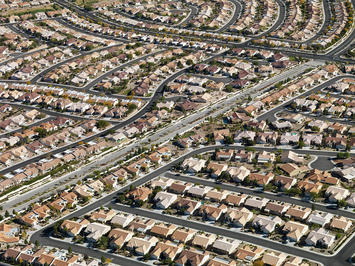
Community has a great role in an exploration of process/thing
relationship. It is important to acknowledge that a lot of community activism
is absolutely fundamental to many forms of social struggle. Community activism can
be very important moment in more general mobilization. So construction of
community is not as an end in itself but as a moment in a process. That is why
Harvey criticizes the belief that good design will solve social process problems.
He argues the social process underlying even the best designed, community
enhancing place need to be cultivated and sustained. Just building a remarkable
physical community will not create community, but there should be a dialectical
view of relationships between process and community.


No comments:
Post a Comment