Monday, 24 September 2012


A Ladder of Citizen Participation

Last week, we elaborated a new discussion topic a ladder of citizen participation. What does citizen participation means? Is this means mechanism for public to express opinions or process of protesting, influenced by different political ideologies. Ultimate result will be power to the citizen from either process. To describe about this topic in planning viewpoint, I would like to describe more about article name “a ladder of citizen participation”.
In 1969 Sherry Arstein tried to discuss about a ladder of citizen participation showing eight different types of participation. She defines citizen participation as the redistribution of power that enables the have- not citizens, presently excluded from the political and economic process, to be deliberately included in the future.
She had described the one by one step in the ladder. The first two steps of ladder are Manipulation and Therapy. These two steps describe the levels of non-participation, where their objectives are not to enable people to participate in planning, but to enable power holders to educate the participants. Next two steps are Informing and Consultation; objectives are to inform the citizens but no response about people’s views and ideas. In next step, Placation; people are allow to have advice but the power holders will make the final decisions.
Further up the ladder are levels of citizen with increasing degrees of decision- making. The 6th step is Partnership, which enables people to negotiate and engage in trade-offs with traditional power holders. In the last two steps of ladder, Delegated power and citizen control, the have-not citizen obtain the majority of decision- making seats or full managerial power.  


Even though people are not fully getting power to make decision today, but they are actively engaging in sharing views and ideas. Today they are in tokenism phase of ladder, people are informed and consulted and placated. There are some examples like London Mayor’s plan, people were informed, open for consultation and input were valued and final decision was made by mayor.


There are lots of advantages of giving power to citizen than disadvantages. This does not mean giving all power to citizens will make planning process successful. But the collaboration between citizens, expert planner and different private and public agencies, discussion about next alternate plan, sharing ideas and views between them will definitely produce a successful plan.

The Planner as Advocate in Plural Planning

Unitary planning is practiced, when one agency prepared comprehensive plan with little or no community or outside input, and without researching viable alternatives. This is non-democratic process in planning. Whereas in other hand, plural planning is completely different than unitary planning, which explores and discuss multiple option for each proposed plan, hearing from different interest groups, giving all groups voice whether they have had traditional power within a community or not.

In plural planning, advocacy is means of professional support for competing claims about way of community’s development. In contrast to above statement, in unitary planning, advocacy is not so important because it does not have any issues, any competition or rivalry from any other private or public agencies. So advocacy is more sustainable in plural planning than in unitary planning.

As legal advocate must argue for his own and his client’s sense of legal propriety or justice, similar to that, the planner as advocate would appeal for his own and his client’s view of the good society. In fact, the advocate planner would be more responsible to his client and express his client views. Importantly, advocate planner would be responsible to his client for preparing plans and foe all of the other elements embracing the planning process.

Advocate planner are accountable to prepare plans that describe the explanation of the arguments made in other plans. Therefore advocate’s plan must have some of the characteristics of a legal brief like documents presenting the facts and reasons for supporting one set of propels and facts and reasons indicating the weakness of counter-proposals. More over advocate planning assist the process of plan evaluation, by making more perceptible the values underlying plans and making definition of social costs and benefits more precise.
Advocate planners also have some educational adversary nature, which made them to inform other groups, including public agencies of the conditions, problems and outlook of the group they represented. They also inform their clients of their rights under planning and renewal laws. Above all advocate’s most important function is to carry out the planning process for the organization and to argue believably in favours of its planning proposals.
 A general view of the stadium before the Women's Football Quarter Final match between Great Britain and Canada, on Day 7 of the London 2012 Olympic Games at City of Coventry Stadium on August 3, 2012 in Coventry, England.
  

Thursday, 6 September 2012

       Brasilia : Example of Modern Urban Planning

-Sarad Chalise

There are many cities in the world; some of them are historically great because of their importance in the history. Great cities attract ambitious people. You can feel it when you walk around one. Every great city passes the message to us, that we could do better, for that we must try hard. So I reckon we, planner, should inspire by those cities, that has been created by great legends of planner and architect and getting inspire from their hard work we have to create our own legacy to the future planners.

File:Montagem Brasília.jpg

After great World War II, world’s most of the nation started to give relive to their countries. They started to rebuild their nation again by doing economic progressiveness. They started to rebuild cities, big skyscrapers; great wonder building, by doing great research and planning.Today I am going to write about city, which has been the great example of modern Urban Planning. That city is Federal capital of Brazil; Brasilia. The city is located in the federal district and is in the central-west region of the country, along a plateau known as Planalto Central.
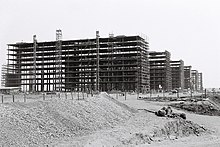
Brasilia under construction in 1959

The city was planned and developed in 1956, with Lucio Costa as the principal urban planner and Oscar Niemeyer as the principle architect. Finally on April 22 1960, the people of Brazil were able to experience their new, young and great city, Brasilia as a federal capital city.  


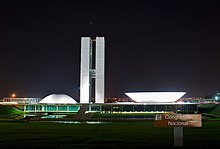
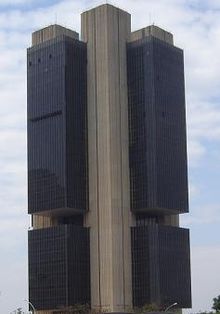
As the national capital, Brasilia is the seat of all three branches of Brazilian government. The city also host the many headquarter of many Brazilian and multinational companies. The location for big commercial and residential buildings, expensive urban areas, as well as building the city around large avenues and dividing sector, have sparked a debate and reflection on life in big cities in the 20th century. The city is so managed, that it has been divided in different sectors for different purposes. When we see the city from the above, the main portion of the city looks like an airplane or butterfly.


The residential zone of inner city is arranged into superblocks. Apartment building, school, retail stores, and open space are included in superblocks. At the northern end of lake Paranoa’, separated from inner city, is a peninsula with many fashionable homes, and a similar neighbourhood exists in southern lakeshore.


Brasilia also the only one city in the world built in the 2oth century to be awarded the status of Historical and Cultural Heritage of Humanity by UNESCO. From every aspect, Brasilia has been created as a great, beautiful, modern city in the world.  Finally, there are lots of planned city in the world but Brasilia is the one from which we, student of planner could get great inspire and open up our creativity in planning different things since the time of study phase to the professional phase.