Saturday, 24 November 2012


History of Australian Planning

Since the America has been central to world sweeping process in the exercise of profound economic military, ideological, diplomatic, bureaucratic and cultural power, Australia has experienced some influenced somewhere in its urban planning. Before planning in Australia developed around 1900 as a reform movement concerned with condition in Australian cities, Government Macquarie and Francis Greenway, the colonial architect setup the centre structure of constructed city during 1810-1821. Since then to until 1890’s there were none any important planning was experienced by Australia.


During 1890’s, planning in Australia had started to flourish back again. At the turn of twentieth century, many progressive urban Australian looked abroad for the inspiration required to transform what they saw as uninteresting colonial cities despoiled by utilitarianism devoid of word-class public spaces and landmarks and lacking civic pride. After the few searches for artistically planned urban structure, all over the Europe and its mother country Britain, they could not find what they were looking for and they turned to the United States, then in throes of the city beautiful movement. There a new and ambitious civic language partly deconstructed and reassembled from European precedents of grand public buildings, civic centres, park systems, height controls, a gateway features, and artistic street was being codified in impressive new master plans.


The idea of beautiful movements helped to set the scene for the 1911 to 1912 competition to design a new federal capital city. During that period Royal commission for improvements of Sydney and its suburbs were also acting to improve the physical and public infrastructure and also for the beautification of Sydney city. During 1910s Australian planning also experienced by British garden city movement to surround communities by greenbelts. Since then to modern era 1980s, many changes were done in terms of rules regulation and development. After entering to the modern era Australian planning started to make planning side by side with globalization, sustainability and climate change to keep the urban planning viable.

Just City

In week 12, we had a seminar for the article “New Directions in Planning Theory” written by Susan S. Fanstein. She is currently a professor of urban planning at Harvard University and widely regarded leading figure in the field of Urban Planning.In that article she has discussed and critique contemporary planning theory in terms of its usefulness in addressing its defining question: What is the possibility of consciously achieving widespread improvement in the quality of human life within the context of a global capitalist political economy? She also came up with three ideas of planning, the communicative model, the new Urbanism and the just city.

The first type of a planning, the communicative model is also called the collaborative model which emphasize the planners as a mediator, among stakeholders in certain planning circumstances. The second one, the new Urbanism just tries to figure out the physical picture of a desirable city to be obtained through planning. The last but not the least, just city, which derives from the political economy tradition presents a model of spatial relations based on equity.


Even though communicative model and the new urbanism are also sensible concept of planning theorist but concept of just city is more important for city planning. So in this blog I would like to talk more about just city. The concept of just city encourages planners and policymakers to embrace a different approach to urban development. It describes the planning theorist as an advocates-not necessarily the advocate for a particular group- but as the advocate of program. Radical democrats and political economists are the two categories of just city theorists. Radical democrats accept conflictual view of society and deny the more communicative involvement of civil society together with stakeholders. The political economists take an explicitly normative position concerning the distribution of social benefits.


Finally a theory of the just city values participation in decision making of relatively powerless groups and equity of outcomes because they are influence by concept of ideal city and neoliberalism ideology. But concept of just city will sustain forever in our rich- poor class based society?

Sunday, 11 November 2012


 Three Significant developments but no paradigm shifts

The history of modern urban planning dates from 1850’s. There have been a number of important shifts in town planning theory since the end of Second World War in 1945. Although there has been some changes in planning theory but it still needs some answer to justify the questions arises during the trans formative revolutionary process. Such questions are like what have been the most significant changes? And how significant have their changes been?

To justify these questions Nigel Taylor, a principal lecturer in school of planning and architecture and also a author of our week 11 seminar articles named as “Anglo- American Town Planning Theory since 1945: Three Significant developments but no paradigm shifts” has given his overview of evolution of town planning thoughts since 1945 and an interpretation of the most significant shifts in planning thought over this period. The development of planning theory has been started from Britain and North America but the revolutionary thoughts and ideas have been influential elsewhere.

According to Taylor there has been three major shift occurred in planning theory since 1945. The first one was the shift from the urban design tradition of planning to the systems and rational process views of planning, emerged during 1960s. The second was a shift from a substantive to a procedural conception of planning, evolved further through 1970s and 1980s. Since then planner were not only designer, they were known by facilitator, which takes other people views to make planning judgement. The third one was shift from the modernist to postmodernist ways of thinking. Planners role now became more managerial rather just designer.

Although there have been significant shifts in planning thought since 1945, there have also been significant continuities. Therefore, the shifts in town planning thought over this period can be regarded as development rather than as a paradigm shift of planning. 

Saturday, 10 November 2012


Communicative Argumentation: A models of conventional rational planning process

Communicative argumentation is a social process which involves two or more individuals responding to one another’s clam and support for such a claim. Referring Patsey Healey, a retired professor at global urban research unit and also specialist in planning theory and process, communicative arguments maintain the level of places of urban regions and city neighborhoods  They have changed and start to show the future of planning. She also argues for a paradigm shift in the communicative aspects of planning theory and practice. In the second half of this century, two waves have swept across planning theory and process.  The first one is comprehensive rational planning process, methodological and institutional, which has brought the instrumental rationality and regional economics aligned to a management science which promoted strategic planning process based on modelling the dynamics of urban systems and managing them with strategies developed through comprehensive rational planning process. The second one is political economy of urban regions in the 1980’s, aggressively critical, which has provided the foundations for new ways of analyzing the complex layering of different economics dynamics in urban regions.


More briefly, Professor Healey has listed five ideas under different heading with the step by step models of conventional rational planning process in communicative argumentation. They are location and access: finding out suitable place or arenas for public discussion during policy making and setting up procedure of arenas and provide better access for community members; what style: selecting an inclusionary style and scope of the discussion; Sorting and Dissecting: sorts out different issues which arise in discussion through the argumentation and finds outs the common opinion; New discourse: exploring different story lines and checking who belongs in the story; Agree and Critique: political community get to agree on a strategy, and maintain that agreement over time while continually subjecting it to critique.

 By making communicative argument process as a social process in the field of planning we can definitely produce benefit out of it, to the community. Such as everyone would get chance for community participation, refreshing the old ideas, normative judgement, avoids marginalization, giving respect to people from different culture, language, society etc. In conclusion, Community or participation based argumentation process always ended up with consensus because they will focused on common issues and get different opinions from different participation and produce the common opinions after doing argumentation.


Contested cities: social processes and spatial form

Cities are close knit communities. They are also fundamental ecological features in themselves and the process. In week 9, we had a seminar on topic “contested cities: social processes and spatial form” written by David Harvey, a well-known geographer. He thinks that cites are critical to understanding the current human condition and they are sites of conflict based on race, ideology, gender and other social categories. David Harvey emphasize the importance of thinking about cities in terms of processes rather than just things. Those processes are both shaped by time and place and shape time and place. The twentieth century has been the century of urbanization. At the beginning of this century, no more than 7 per cent of the world’s population could reasonably be classified as urban. But this stage there is as many as 500 cities with more than a million inhabitants.

 As Harvey had mentioned, time and space has the great role in urbanization, and urbanization being the urban process which links between the city and process. The view of space and time do not exist outside of process. Each particular kind of process will define its own distinctive spatio- temporality. From this point we have to understand that space and time are not simply constituted by but are also constitutive of social processes.

 Community has a great role in an exploration of process/thing relationship. It is important to acknowledge that a lot of community activism is absolutely fundamental to many forms of social struggle. Community activism can be very important moment in more general mobilization. So construction of community is not as an end in itself but as a moment in a process. That is why Harvey criticizes the belief that good design will solve social process problems. He argues the social process underlying even the best designed, community enhancing place need to be cultivated and sustained. Just building a remarkable physical community will not create community, but there should be a dialectical view of relationships between process and community. 

Sunday, 4 November 2012


The Face of Conflicts

When there is talking topic about planning, conflict comes first before anything else in all around the world. The issue of conflict is anything but new to planning. Planning theory and research have since long recognized the significance of conflict. So good planning needs to have visions of ends results, democracies planning process and theory, and never achieved without conflict. In planning process there is always conflict between local neighborhood and developers for local land use for new planning.

By reading an article named “Planning in the face of conflict” written by John Forester, a professor of city and regional planning at Cornell university, simply can understand that planners and others involved in city development to study what the practice of city planning is really like in the face of conflict. Forester thinks that planners are mediator and they need to help both developers and local neighborhood residents through the complexities of the planning process and most of the planning issues, planners can be effective in the face of conflict. So the Forester says successful planners handle conflicts both through formally and informally and that’s why they have to respond to every complex and contradictory duties.

Even though planners are mediator between conflicting parties, but same time they have to negotiates for themselves as interested parties. These are some critical phases that planners have to get through it and have to explore different planning strategies to deal with such conflicts. To deal with such conflicts, planners have some responsibilities to accomplished. Firstly, planner must help both developers and neighborhood residents then planners need to be concerned with timing and then need to deal with conflicts between project developers and affected neighborhood residents and finally should complete formal responsibilities and injecting informal initiatives. In conclusion, planners have the great role and responsibility to negotiate and mediate during the face of conflicts in planning process.  

Monday, 24 September 2012


A Ladder of Citizen Participation

Last week, we elaborated a new discussion topic a ladder of citizen participation. What does citizen participation means? Is this means mechanism for public to express opinions or process of protesting, influenced by different political ideologies. Ultimate result will be power to the citizen from either process. To describe about this topic in planning viewpoint, I would like to describe more about article name “a ladder of citizen participation”.
In 1969 Sherry Arstein tried to discuss about a ladder of citizen participation showing eight different types of participation. She defines citizen participation as the redistribution of power that enables the have- not citizens, presently excluded from the political and economic process, to be deliberately included in the future.
She had described the one by one step in the ladder. The first two steps of ladder are Manipulation and Therapy. These two steps describe the levels of non-participation, where their objectives are not to enable people to participate in planning, but to enable power holders to educate the participants. Next two steps are Informing and Consultation; objectives are to inform the citizens but no response about people’s views and ideas. In next step, Placation; people are allow to have advice but the power holders will make the final decisions.
Further up the ladder are levels of citizen with increasing degrees of decision- making. The 6th step is Partnership, which enables people to negotiate and engage in trade-offs with traditional power holders. In the last two steps of ladder, Delegated power and citizen control, the have-not citizen obtain the majority of decision- making seats or full managerial power.  


Even though people are not fully getting power to make decision today, but they are actively engaging in sharing views and ideas. Today they are in tokenism phase of ladder, people are informed and consulted and placated. There are some examples like London Mayor’s plan, people were informed, open for consultation and input were valued and final decision was made by mayor.


There are lots of advantages of giving power to citizen than disadvantages. This does not mean giving all power to citizens will make planning process successful. But the collaboration between citizens, expert planner and different private and public agencies, discussion about next alternate plan, sharing ideas and views between them will definitely produce a successful plan.

The Planner as Advocate in Plural Planning

Unitary planning is practiced, when one agency prepared comprehensive plan with little or no community or outside input, and without researching viable alternatives. This is non-democratic process in planning. Whereas in other hand, plural planning is completely different than unitary planning, which explores and discuss multiple option for each proposed plan, hearing from different interest groups, giving all groups voice whether they have had traditional power within a community or not.

In plural planning, advocacy is means of professional support for competing claims about way of community’s development. In contrast to above statement, in unitary planning, advocacy is not so important because it does not have any issues, any competition or rivalry from any other private or public agencies. So advocacy is more sustainable in plural planning than in unitary planning.

As legal advocate must argue for his own and his client’s sense of legal propriety or justice, similar to that, the planner as advocate would appeal for his own and his client’s view of the good society. In fact, the advocate planner would be more responsible to his client and express his client views. Importantly, advocate planner would be responsible to his client for preparing plans and foe all of the other elements embracing the planning process.

Advocate planner are accountable to prepare plans that describe the explanation of the arguments made in other plans. Therefore advocate’s plan must have some of the characteristics of a legal brief like documents presenting the facts and reasons for supporting one set of propels and facts and reasons indicating the weakness of counter-proposals. More over advocate planning assist the process of plan evaluation, by making more perceptible the values underlying plans and making definition of social costs and benefits more precise.
Advocate planners also have some educational adversary nature, which made them to inform other groups, including public agencies of the conditions, problems and outlook of the group they represented. They also inform their clients of their rights under planning and renewal laws. Above all advocate’s most important function is to carry out the planning process for the organization and to argue believably in favours of its planning proposals.
 A general view of the stadium before the Women's Football Quarter Final match between Great Britain and Canada, on Day 7 of the London 2012 Olympic Games at City of Coventry Stadium on August 3, 2012 in Coventry, England.
  

Thursday, 6 September 2012

       Brasilia : Example of Modern Urban Planning

-Sarad Chalise

There are many cities in the world; some of them are historically great because of their importance in the history. Great cities attract ambitious people. You can feel it when you walk around one. Every great city passes the message to us, that we could do better, for that we must try hard. So I reckon we, planner, should inspire by those cities, that has been created by great legends of planner and architect and getting inspire from their hard work we have to create our own legacy to the future planners.

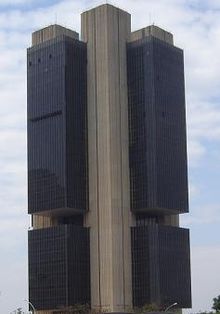
File:Montagem Brasília.jpg

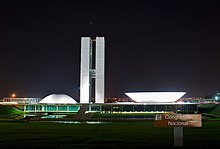
After great World War II, world’s most of the nation started to give relive to their countries. They started to rebuild their nation again by doing economic progressiveness. They started to rebuild cities, big skyscrapers; great wonder building, by doing great research and planning.Today I am going to write about city, which has been the great example of modern Urban Planning. That city is Federal capital of Brazil; Brasilia. The city is located in the federal district and is in the central-west region of the country, along a plateau known as Planalto Central.
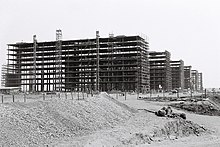
Brasilia under construction in 1959

The city was planned and developed in 1956, with Lucio Costa as the principal urban planner and Oscar Niemeyer as the principle architect. Finally on April 22 1960, the people of Brazil were able to experience their new, young and great city, Brasilia as a federal capital city.  


As the national capital, Brasilia is the seat of all three branches of Brazilian government. The city also host the many headquarter of many Brazilian and multinational companies. The location for big commercial and residential buildings, expensive urban areas, as well as building the city around large avenues and dividing sector, have sparked a debate and reflection on life in big cities in the 20th century. The city is so managed, that it has been divided in different sectors for different purposes. When we see the city from the above, the main portion of the city looks like an airplane or butterfly.


The residential zone of inner city is arranged into superblocks. Apartment building, school, retail stores, and open space are included in superblocks. At the northern end of lake Paranoa’, separated from inner city, is a peninsula with many fashionable homes, and a similar neighbourhood exists in southern lakeshore.


Brasilia also the only one city in the world built in the 2oth century to be awarded the status of Historical and Cultural Heritage of Humanity by UNESCO. From every aspect, Brasilia has been created as a great, beautiful, modern city in the world.  Finally, there are lots of planned city in the world but Brasilia is the one from which we, student of planner could get great inspire and open up our creativity in planning different things since the time of study phase to the professional phase.
                          

Thursday, 30 August 2012

Is planning an art or science?


As I am a student of Bachelor of Urban and Regional Planning, I have a unit called Planning Theory and Process 1, need to be complete. This basically introduces us into historic and contemporary planning theories and applied planning processes and tools used. Based on classic planning readings, it is aimed to stimulate the students’ critical reflection and insightful observations on planning topics and encourage the students to provide creative solutions to real world planning problems.

We discuss about science and art to 1930s to millennium early this week. Today I am going to write about what is planning and whether it is an art or science?  Let’s start with planning first. If someone asks us what is the meaning of planning? , Our first answer, regards on that will be some sort of thinking, before we start any task. Yes this is true; planning is strategic thinking before we start any task. In broad sense, planning is the mode of thinking critically and creatively about and organizing the activities required to achieve a desired goal. Planning is a fundamental property of intelligent behaviour, which involves the creativity, imagination, broadways of thinking etc. Planning also employs the creation and maintenance of a Plan.

Now, next thing, is planning an art or science? In my understanding planning is a science and art both. Why? Because in planning there are lots of process , assumptions , rational methods employed, conclusion  reached and regular re- examination of  past assumptions, methods and conclusion. Also, to be a planner you have to maintain certain standard and must complete certain qualification which involves the certificate tests, ethical standards and documentable and quantifiable results. These all which I mentioned above are part of science not an art. Even though planning are more into science, there is also artistic abilities that planner used with science to be a successful planner. A successful planner is often the result of artistic use of scientific conclusion, rather the product of a scientific process itself. This is why I thought Planning is more science based but also based on artistic abilities. What do you think?